PROBUILDSTAV
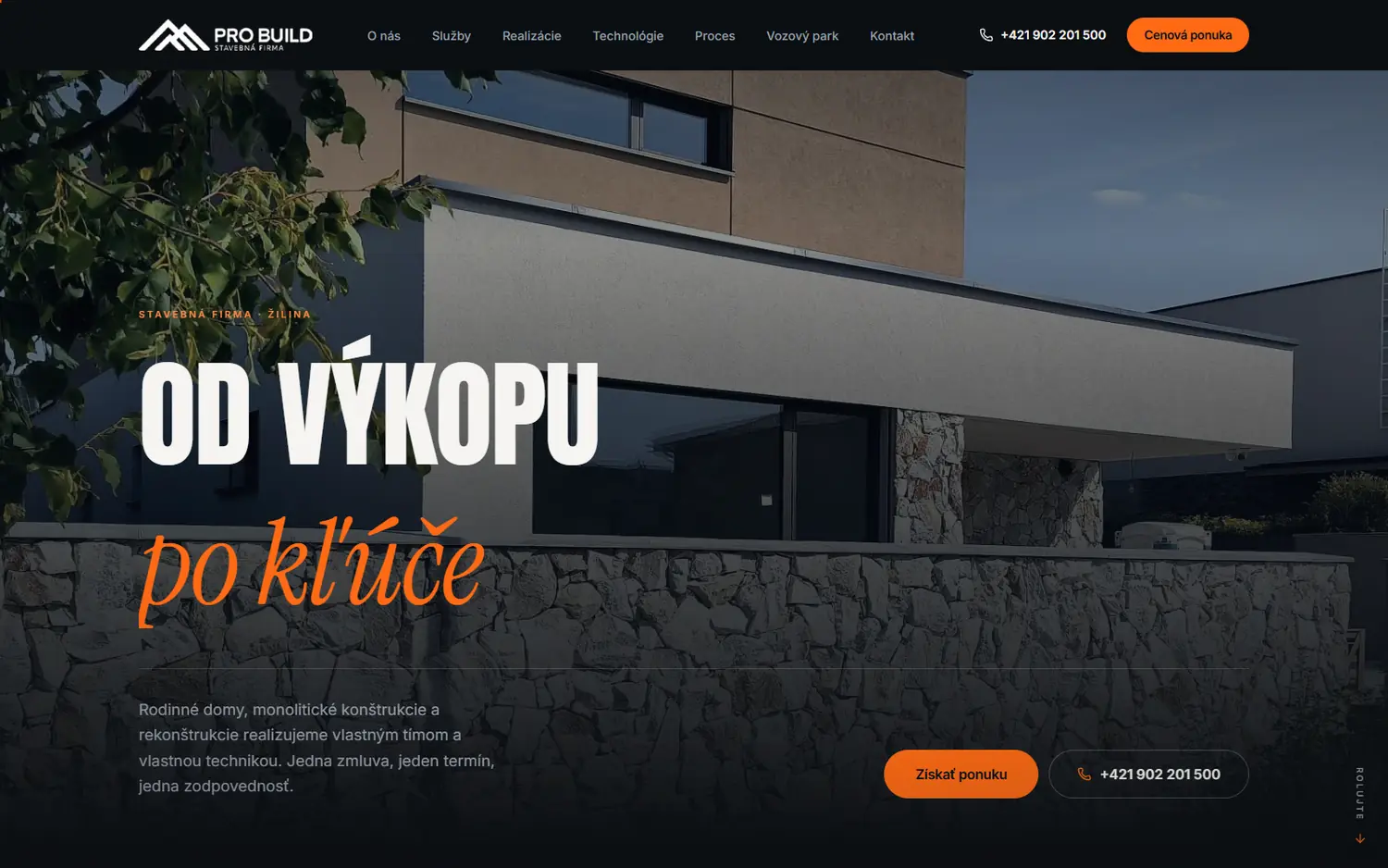
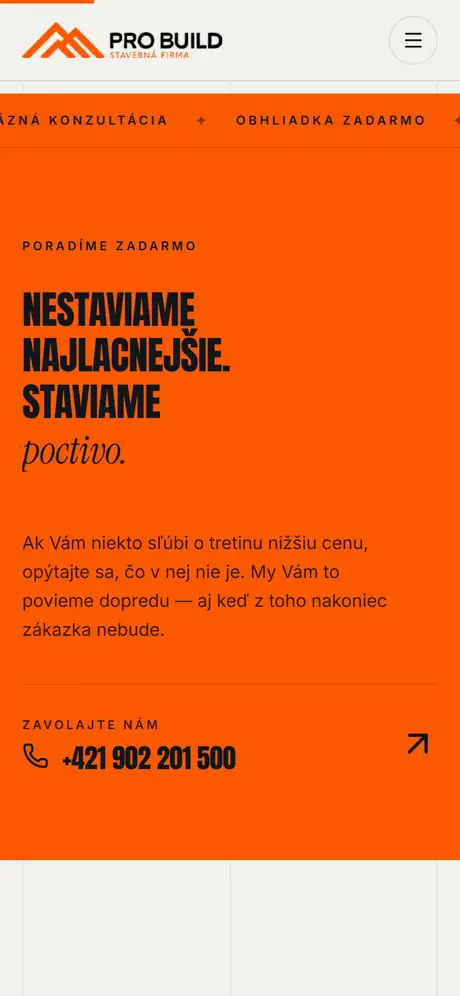
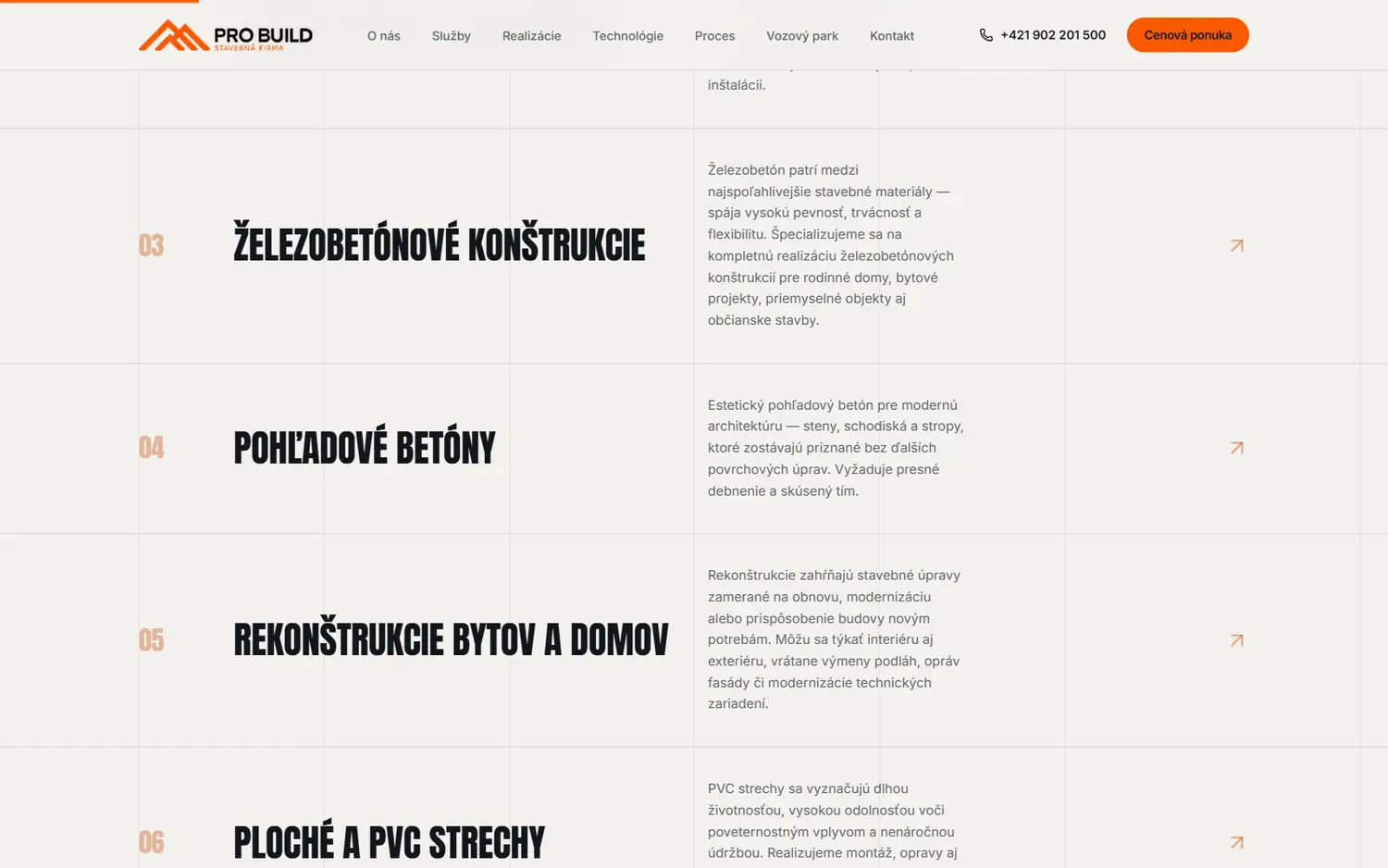
A construction company in Žilina had an old WordPress site that loaded slowly and lost people on mobile before they could read what the company does. I rebuilt it from scratch and deployed it to their domain.
- PRO – Build, s.r.o., Žilina
- 2026
- Design, code, content, launch
- Next.js · Vercel · GA4
- Live, supported until 20 Nov 2026
The result
| Measured · 19 Aug 2026 | Old site | New site | Difference |
|---|---|---|---|
| Time until the first content appearsUntil then the visitor stares at a blank screen. This is the moment they decide whether to wait or go back to Google. | 3× faster | ||
| Data that has to be downloadedLess data means the page opens even on a weak signal, for example on a building site. | 2.4× less | ||
| Requests to the serverEvery image, font and script is a separate request. The fewer there are, the sooner the page is usable. | 1.8× fewer | ||
Both sites measured over the internet, in the same browser, on the same connection and on the same day, 19 August 2026. Three runs each, median reported. The old WordPress was measured on the server where it still runs, so the comparison matches what visitors actually saw.
The brief
The company builds houses and halls turnkey. People choose a builder by what they have actually built, so the site had to carry photographs of finished projects, and a lot of them.
The old site ran on WordPress and choked on that many images. Most people open a website on their phone, often away from wifi, for example on a building site where the signal is weak.
What I built
Eleven projects, each with its own page and a timeline of construction phases. 375 photographs in total, 87 of them in a themed gallery, all converted and resized by a batch script.
Two forms that genuinely send: a contact form and a four-step quote request. Redirects from every old URL so the search ranking did not get lost.
Analytics behind GDPR consent: the scripts load only after the visitor clicks. Declining is as easy as accepting.
Two decisions worth explaining
Homeowners’ names did not go on the site
The client sent twelve names with towns to use as references. A name plus a town plus “this is his house” is personal data, and marketing use needs demonstrable consent. I have left the fields empty until consent comes in, because it is the only version that does not expose the client to risk.
I did not invent reviews
It would have been easy to write quotes from happy customers. Under Slovak consumer protection law an invented review is a deceptive practice. The references section therefore shows finished projects and photographs.
Tell me what you need.
Write a few sentences about the project. I reply within one working day, and you get an estimate of price and timeline within two working days of our first call.